
Loading...
Serving Torrance, CA and surrounding areas. (424) 318-3154
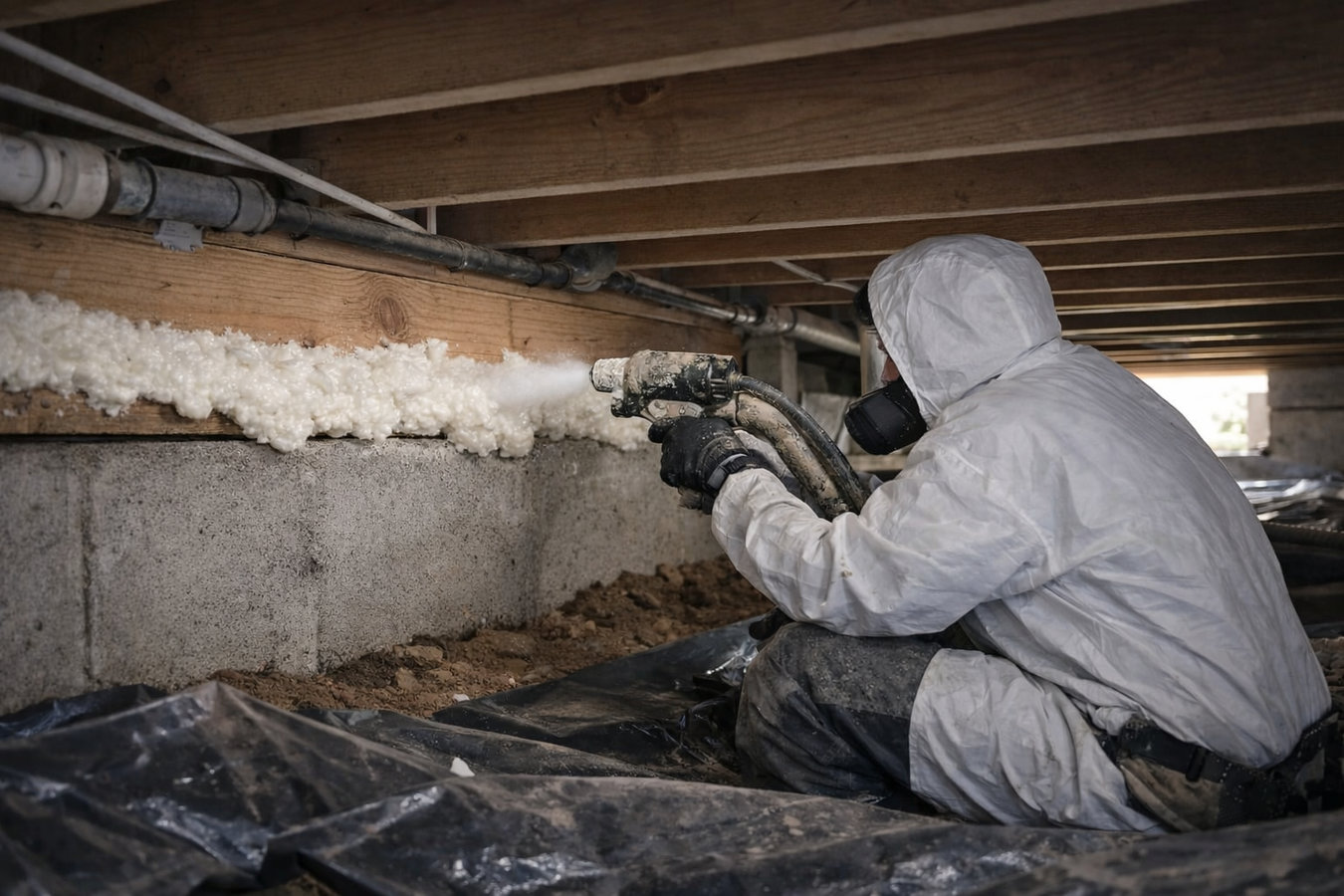
Cold floors, rising utility costs, and that June Gloom musty smell often trace back to the same place - an unprotected crawl space. We insulate and seal it so coastal moisture stays out and your home stays comfortable year-round.
Crawl space insulation in Torrance acts as a thermal blanket between the cool, damp ground beneath your home and the living floors above it - blocking heat loss, moisture migration, and outdoor odors from working their way up. Most installations are completed in one day, with fiberglass batts between floor joists or spray foam applied to the crawl space walls, depending on whether your space is vented or sealed.
Torrance homeowners deal with a specific challenge that inland cities do not: the Pacific Ocean is close enough that moisture pressure is steady year-round, and it spikes every spring during the June Gloom season. Crawl spaces in Torrance's postwar homes - built largely in the 1950s and 1960s - were often designed without the moisture protection standards we use today. The result is insulation that has absorbed decades of coastal humidity and wood structure that has taken a slow, steady hit. In many cases, removing the old material and starting fresh is the right call before new insulation goes in - see our wall insulation service for homes where the work extends beyond the crawl space.
The U.S. Department of Energy recommends addressing both insulation and air sealing in crawl spaces together - a standard we follow on every Torrance project.
In Torrance, where temperatures rarely drop dramatically, cold floors are often a sign that the crawl space below is not insulated well enough to block the cool, damp air from the ground. If certain rooms feel noticeably colder at floor level even in spring or fall, the crawl space is worth investigating. This is one of the most common complaints homeowners in the South Bay report before discovering their crawl space insulation has failed.
If your home develops a damp, musty odor around May or June - right when Torrance's coastal fog season arrives - moisture is likely moving up through an unprotected crawl space. The smell tends to be strongest near the floor and in rooms closest to the ground. This is not just unpleasant; it can signal that mold or mildew is beginning to grow in the crawl space itself.
When crawl space insulation fails or was never adequate, your HVAC system works harder to maintain a comfortable temperature because conditioned air escapes through the floor. If your energy bills have crept up without an obvious explanation, or if your system runs almost constantly during mild weather, a crawl space inspection is a logical first step.
Rodents and insects are drawn to crawl spaces that are warm, damp, and poorly sealed - conditions that often go hand in hand with failing insulation. If you have noticed droppings, chewed materials, or signs of nesting near your access point, it is worth having both the pest issue and the insulation assessed together. Addressing one without the other often means the problem returns.
We install fiberglass batts between floor joists for vented crawl spaces - the most common setup in Torrance's postwar homes - and spray foam on crawl space walls when converting to a sealed, conditioned space is the better approach. In either case, we address air gaps around pipes and utility penetrations before any insulation goes in, because skipping that step is how an otherwise decent job delivers disappointing results. For homes where the crawl space ground is exposed, we pair insulation with a crawl space vapor barrier - a thick plastic sheet that stops ground moisture from evaporating upward into the wood structure and the new insulation.
California's Title 24 energy code sets minimum insulation performance requirements for residential projects, and we meet or exceed those standards on every permitted job. For Torrance homeowners dealing with older or failing material, we start with removal before installation to make sure the new insulation is going into a clean, dry space. The wall insulation upgrade is a common companion project for homeowners who want to close the full envelope in one visit.
Best for vented crawl spaces - installed between the joists beneath your floor, suited to the majority of Torrance homes built before 1980.
For sealed crawl spaces where ducts run through the space - creates a semi-conditioned area that outperforms floor joist insulation in many South Bay homes.
A heavy plastic ground cover that stops moisture from rising up through the soil - essential in Torrance's coastal climate and almost always included in a complete job.
For older Torrance homes with original insulation that has absorbed moisture or been disturbed by pests - starts clean so the new material can perform as intended.
Torrance sits a few miles from the Pacific Ocean, and that proximity shapes what happens in crawl spaces across the city in ways most homeowners do not think about until the problem becomes obvious. The coastal marine layer that rolls in most mornings from late spring through summer keeps the air consistently humid, and that moisture works its way into crawl spaces through vents, gaps in the foundation, and the bare ground. Homes in neighborhoods like Southwood and Southeast Torrance - built in the 1950s and 1960s to the standards of that era - often have vented crawl spaces with fiberglass batts that have been absorbing that moisture for decades. By the time a homeowner notices cold floors or a musty smell, the insulation has typically lost most of its effectiveness and the wood structure has begun to soften.
The June Gloom season - roughly May through July - is when this problem peaks every year, and homeowners who schedule their crawl space work before the fog season begins give their homes the best protection heading into the most challenging months. Homeowners in nearby Redondo Beach and Hermosa Beach face the same moisture conditions, and the pattern is consistent: vapor barriers and proper insulation installed together are what actually hold up in this climate. One without the other tends to fail within a few years.
We ask about your home's age, whether you have noticed any specific problems, and whether your crawl space is vented or sealed. Most Torrance homeowners get a free assessment scheduled within a few days. We respond within 1 business day of your request.
We access your crawl space and evaluate the existing insulation, signs of moisture or mold, the state of any vapor barrier on the ground, and gaps that need sealing. You receive a written estimate that breaks down scope and cost before you commit to anything.
For projects in Torrance that involve spray foam or work tied to a larger renovation, we pull the required permit from the City of Torrance Building and Safety Division before work begins. This step is handled entirely by us and adds a few days to the timeline - it also guarantees a city inspection at completion.
The crew removes any old damaged material, addresses moisture issues and air gaps, then installs the new insulation. Before leaving, they walk you through what was done - with photos of the finished crawl space, since most homeowners prefer not to climb in themselves.
Free estimate, no pressure. We respond within 1 business day and put the full scope in writing before any work begins.
(424) 318-3154We have worked on homes across Torrance and the surrounding South Bay since 2017, including the postwar neighborhoods where crawl spaces have the most age on them. We know what Torrance crawl spaces look like after 60 years of coastal moisture exposure.
Our crews have years of hands-on experience across the South Bay's older housing stock, and we document the finished job on every project so you have a clear record of the scope and results.
In Torrance's marine climate, insulation without a vapor barrier is a half-measure. We always assess whether ground moisture control is needed and include it as part of the project discussion - not as an upsell after the fact.
When your project requires a permit, we handle the filing and inspection through the City of Torrance Building and Safety Division. You receive official documentation confirming the work meets California's energy standards - useful now and at resale.
The ENERGY STAR program sets clear standards for insulation performance - meeting those benchmarks on a permitted job in Torrance means your crawl space has been inspected and verified, not just completed and closed up. That combination of credentials and documentation is what separates a job worth paying for from one you will be revisiting in three years.
Pair crawl space work with wall insulation upgrades to close the remaining gaps in your Torrance home's thermal envelope.
Learn MoreA ground-level vapor barrier is the essential moisture control layer that protects crawl space insulation in Torrance's coastal climate.
Learn MoreBook before the June Gloom season arrives and protect your home from the coastal moisture that hits hardest in late spring - call for a free written estimate.